
Summary
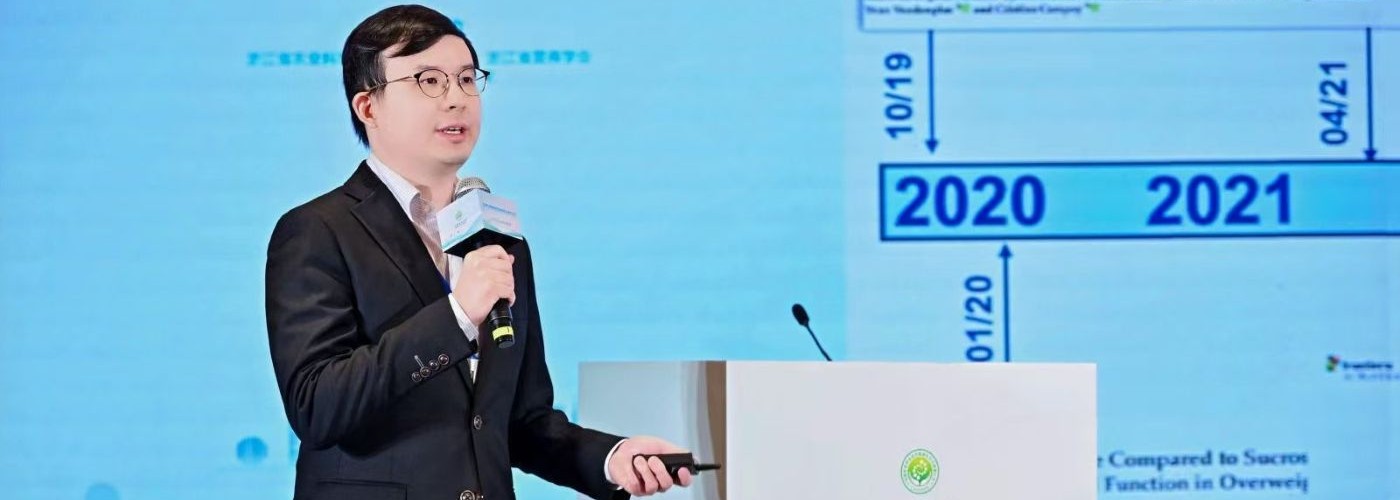
Science creates knowledge, but how does it create real-world impact? In this interview, Alvin, Nutrition Communication Manager at BENEO Asia Pacific, shares why he transitioned from academic nutrition research to the commercial side of the food industry. He explains how scientific expertise can help bridge the gap between research and product innovation, why evidence-based nutrition communication is more important than ever, and how trust, transparency and critical thinking support informed decision-making. His journey illustrates how nutrition scientists can contribute to healthier food innovation while remaining firmly grounded in science.
In this interview, you’ll discover:
- Why a nutrition scientist chose industry over academia
- How nutrition communication translates scientific evidence into practical business value
- Why evidence-based communication is becoming essential for food manufacturers
- How scientific integrity can coexist with commercial objectives
- Why trust and transparency matter in today’s nutrition landscape
- What skills help scientists succeed in commercial nutrition roles
- How nutrition communication is evolving within ingredient companies
How one nutrition scientist discovered new ways to create impact beyond academia.
When I first asked Alvin if he missed doing research at A*STAR[1], he laughed and said “Not really. I didn’t leave science – I just found a bigger lab“. That stuck with me, because here’s someone who spent years in nutrition science research and willingly walked away from it into the unknown commercial world.
At a time when evidence-based nutrition communication is becoming increasingly important across the food industry, Alvin’s career journey offers a unique perspective on what happens when scientific expertise moves beyond academia and into real-world application. Curious about what motivated such a transition, I sat down with him to hear his story and found myself pleasantly surprised by his answers.
Who is Alvin?

Alvin didn’t set out to leave academia. Trained as a dietitian and nutrition scientist, he spent years conducting research at A*STAR (Agency for Science, Technology and Research in Singapore), exploring how food and nutrition influence human health. But over time, he became increasingly interested in a different challenge: not just generating scientific knowledge but helping translate it into real-world impact.
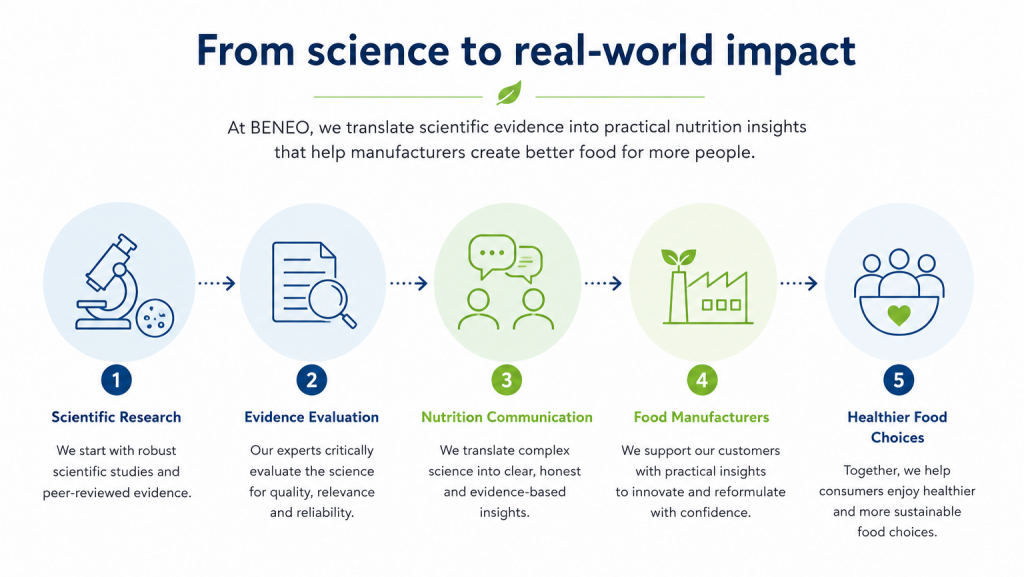
These days, he works in BENEO’s nutrition communication team at the Singapore office. While his day-to-day work has changed, his scientific mindset remains the same. Today, he focuses on translating complex research into practical insights that help customers make informed decisions. Interested in how evidence-based nutrition supports food innovation? Explore our related article on how scientific evidence helps manufacturers develop healthier food and beverage concepts.
The conversation
Q: What initially attracted you to the commercial side of nutrition after flourishing in an academic career?
I really enjoy research, and I still do. But somewhere along the way, I kept looking at my papers and thinking: “Ok, but is anyone actually making changes to their diet because of this?” The answer was usually “not really” or “maybe in ten years.”
Being in the industry let me close that gap. Suddenly, science wasn’t just sitting in a PDF or in online databases. It was helping companies push out healthier products and enabling consumers like you and me have the option to buy them to improve their health and nutrition. It felt like a more tangible achievement.
Q: Nutrition communication in a B2B company – what does your job entail?
I would say that it’s being a translator to bridge the understanding between science and our customers, who are food and drink manufacturers. They come to us with questions like: “Why should we use prebiotic chicory root fibres over other ingredients” or “How can Palatinose™ support weight management?” My job is to give them an honest, science-backed answer, helping them separate what is scientifically proven from what is simply trending.
Further reading: Learn more about Palatinose™ and its unique carbohydrate properties. You may also be interested in our article explaining the science behind prebiotic chicory root fibres and how they support digestive health.
The big shift
Q: What does industry let you experience that academia doesn’t?
The speed. In academia, we spend months or years on a single question or study but in the industry we build on this and take existing evidence to directly support product innovation, reformulation, and healthier food solutions that reach markets and consumers much faster. The ability to connect science with tangible outcomes, and seeing a product in the supermarket with our ingredient, is one of the most rewarding differences.
Q: How has your definition of “impact” changed?
I would say that it has changed significantly. In academia, impact is equal to citations, journal prestige, and maybe a press release. In the industry, the impact is: supporting customers, enabling better choices, supporting evidence-based nutrition communication, and contributing to long-term trust in our ingredients. It is more difficult to measure, but definitely feels more “human”.
On translating science (without dumbing it down)
Q: Why is good science translation so critical right now?
Because there’s more nutrition information available online than ever, but not all of it is accurate or trustworthy. With information at everyone’s fingertips nowadays, it is increasingly difficult to distinguish fact from sensationalism. Customers and partners need clear, evidence-based guidance to make informed decisions; whether they are developing functional products, substantiating claims, or responding to consumer concerns.
Not all customers have the resources to have a strong team of in-house nutrition experts. They trust us to tell them: “Here’s what the evidence actually says. Here’s what it doesn’t say. And here’s what you can trust.”
Q: Does your academic background actually help when communicating complex nutrition topics to non-scientific audiences?
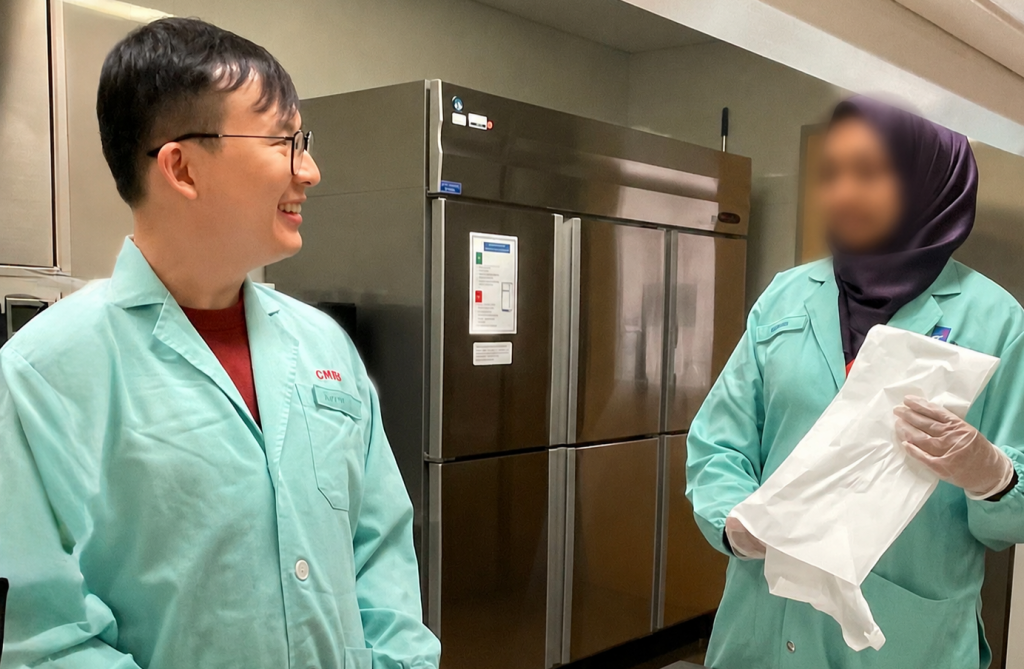
Definitely, because an academic background provides the foundation in critical thinking. When I see a study, I immediately think: What’s the sample size? Who funded it? How was the data collected? This habit makes it easier to evaluate the credibility of information rather than taking claims at face value.
That perspective is incredibly valuable when communicating to customers because it allows me to simplify without oversimplifying and to make messages understandable while maintaining accuracy and nuance.
Trust, scepticism, and the messy reality of nutrition today
Q: How do you balance commercial goals with scientific integrity?
I think it really comes down to not cutting corners with the science. You can still meet commercial goals, but the claims have to be backed by solid evidence and not just picking the data that makes your product look good. And being upfront about limitations matters too, instead of trying to oversell everything.
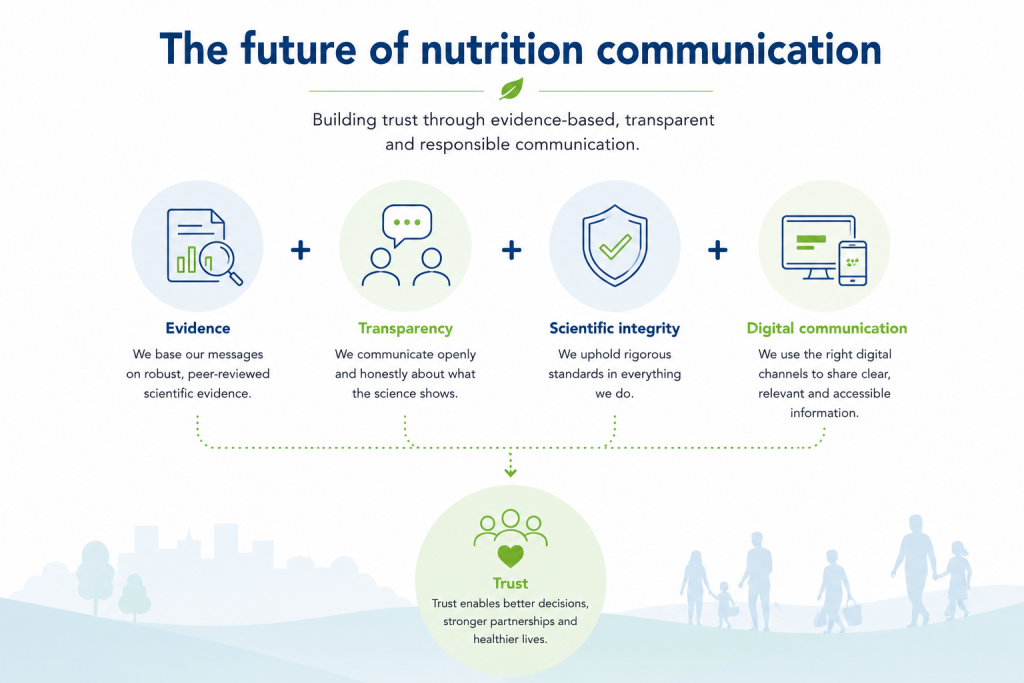
Honestly, in the long run, credibility works in your favour. If customers feel like you’re being transparent and scientifically rigorous, and not just pushing a sale, they’re much more likely to trust you, and that trust is what keeps them coming back.
Q: What role does evidence-based communication play in building long-term trust?
Consumers are very well informed these days, thanks to the accessibility of social media. There are many products in the market that do not live up to their claims so people tend have this natural level of scepticism. In addition to good marketing, showing up consistently with information that is grounded in real science makes a huge difference. Over time, this consistency builds trust not only with customers, but also with other key stakeholders including healthcare professionals, industry partners and regulators.
Q: How has the current nutrition landscape increased the need for strong nutrition communication?
I feel that the need has only become more urgent. Misinformation spreads faster than truth as some of it tend to be more sensationalised or more entertaining. With so many social media content creators competing for attention, it’s easy for customers to get overwhelmed or confused about what to trust.
So, the role of strong nutrition communication is about cutting through that noise, and making sure customers and partners have something steady and credible to rely on. It’s not really about chasing every trend, and more about being a consistent, trustworthy source in the middle of all that.
Advice for scientists on the fence
Q: What would you say to a researcher thinking about moving into industry?
Honestly, I would say to go for it. You’re not “leaving” the science field. You’re simply applying it in a different way. And the reality is, industry really needs people who can think critically, interpret research properly, and help bridge the gap between research and real-world application.
Q: What qualities help scientists thrive in commercial roles?
I think that curiosity and adaptability go a long way. You have to be open to stepping outside your usual lane, working with different teams, understanding how the business operates, and communicating with people who come from diverse backgrounds.
Integrity is just as important. You need to be able to stand by the science, while still translating it into something practical and relevant for customers.
And then there’s the ability to collaborate, simplify complex ideas, and think a bit more strategically about how your work fits into the bigger picture.
One last look ahead
Q: How do you see nutrition communication evolving inside ingredient companies?
I think it’s going to become much more central, not something that sits on the side.
As food manufacturers look for ingredients that deliver real benefits, they’re going to care more about who can clearly explain the science behind them without over promising. That’s where a nutrition communicator does come in. It’s not just about having good data, but being able to translate it in a way that’s clear, honest, and relevant.
Going forward, that probably means being faster, more digital, and more in tune with consumers’ broader priorities, like sustainability, personalised nutrition, and preventive health, while still staying firmly grounded in evidence. Ultimately, I believe that the future of nutrition communication belongs to those who can combine scientific rigour with clarity, helping customers and consumers navigate an increasingly complex information landscape.
Key takeaways
Scientific expertise can create broader real-world impact beyond academic research.
Nutrition communication helps translate complex science into practical insights for food manufacturers.
Evidence-based communication builds long-term trust with customers, healthcare professionals and regulators.
Scientific integrity and commercial success are complementary when communication remains transparent and evidence based.
Critical thinking, curiosity and collaboration are valuable skills for scientists moving into industry.
As nutrition information becomes increasingly complex, trusted scientific communicators play a growing role in supporting informed decisions.
Alvin is a Nutrition Communication Manager at BENEO Asia Pacific. Trained as a dietitian and nutrition scientist, he previously worked in nutrition research at Singapore’s Agency for Science, Technology and Research (A*STAR). Today, he focuses on translating scientific evidence into practical insights that support informed decision-making across the food and nutrition industry. The conversation has been lightly edited for flow and readability.
[1] Singapore’s Agency for Science, Technology and Research