
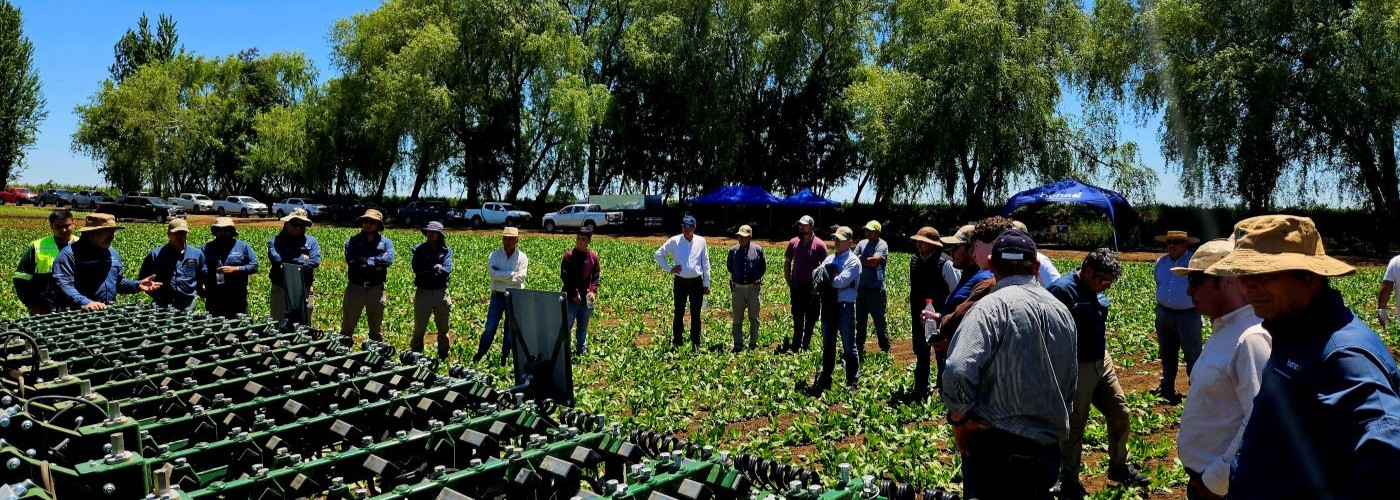
From the introduction of a completely new crop to the establishment of one of the world’s leading production sites for chicory root fibres. The success story of BENEO’s production site in Chile is driven by partnership, continuous improvement and long-term commitment.
Summary
Twenty years ago, growing chicory root in Chile was still a new idea. Industrial chicory was virtually unknown in the country’s south. Today, the Pemuco site plays an important role in BENEO’s global chicory root fibre operations, supplying natural prebiotic ingredients to food manufacturers around the world.
This transformation did not happen overnight. It reflects two decades of collaboration with local farmers, continuous investment and a willingness to learn and improve with every harvest.
Looking beyond the anniversary itself, this article tells the story of how an unfamiliar crop became part of the region’s agricultural landscape and why Pemuco has grown into a core pillar of BENEO’s network of production sites worldwide.
Some things take time to grow
For twenty years, BENEO has been growing more than chicory root in Pemuco, Chile. Together with farmers, employees and local communities, an ambitious idea has developed into one of the world’s leading production sites for chicory root fibres.
In this blog, you’ll discover:
- why BENEO introduced chicory cultivation to Chile
- how farmers, employees and local communities helped shape the site’s development
- how experience gained over twenty years continues to improve cultivation and operations
- why sustainability has become an integral part of the site’s development
- what the Chilean plant tells us about BENEO’s long-term approach to building resilient supply chains
This article looks back at the people, decisions and partnerships that shaped this journey, and explores how a new crop became an important crop alternative for farmers in southern Chile while strengthening BENEO’s global supply of chicory root fibres.
From an unknown crop to global impact
Twenty years ago, few people in southern Chile had heard of industrial chicory.
For local farmers, it was an unfamiliar crop with no cultivation history in the region. There were no established growing practices, no local experience and no certainty that it would succeed.
BENEO nevertheless saw an opportunity. The conditions around Pemuco were well suited to chicory cultivation, because they were similar to the ones known from Central Europe. Additionally, producing in both hemispheres would strengthen supply security by complementing the harvest season in Belgium. It was a long-term investment with global ambitions. Its success, however, would depend on local knowledge, strong relationships and the willingness to build something new together.
That process took time. Season after season, farmers, agronomists and colleagues across the Pemuco operation developed the expertise needed to establish chicory as a viable (and profitable?) crop. What started as a new idea gradually became part of the agricultural landscape in southern Chile.
Today, around 5,000 hectares are cultivated by more than 130 farming partners. The chicory harvested there is processed into prebiotic fibres that are used in a wide range of food and drink applications as well as feed products around the world.
The 20th anniversary offers an opportunity to look back on that journey. More importantly, it shows what can be achieved when long-term commitment is matched by collaboration and a willingness to keep learning.
A bold idea takes root
Building a second cultivation and production site outside Europe was an important step for BENEO.
Chile offered fertile soils, a Mediterranean climate and agricultural expertise. Just as importantly, the opposite growing season made it possible to complement production in Belgium and strengthen supply security for customers around the world.
One challenge quickly became obvious. Industrial chicory was unknown in the region. Growing the crop successfully meant working closely with local farmers, adapting cultivation methods to local conditions and building practical experience together. Every season added to that knowledge and helped establish chicory as a viable crop for the region.
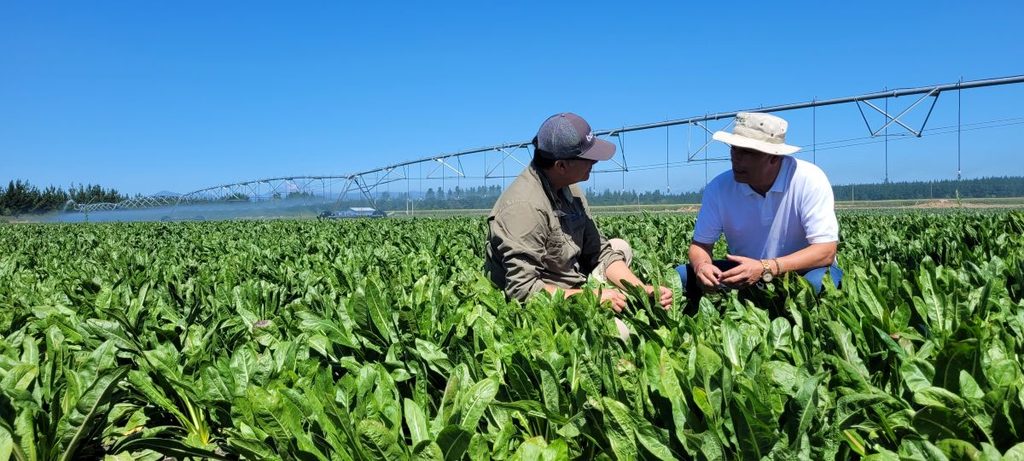
Agricultural Manager Alberto Cañete has experienced that development from the beginning. Looking back, he believes the long-term collaboration with farmers has been one of the site’s greatest achievements.
These results are the outcome of many years of working closely with our farmers. We have developed a system based on ongoing technical advice, the adoption of new technologies and the constant pursuit of best practices. This shared commitment enables us to continue increasing productivity.
Alberto Cañete, Agricultural Manager
The relationships built during those early years continue to shape the way BENEO works today. What started with the introduction of a new crop has developed into long-term partnerships that benefit farmers, the company and the wider region.
Joint growth
Introducing a new crop is only the beginning. Turning it into a successful part of local agriculture takes time, patience and the willingness to learn together. That was exactly the experience in Pemuco.
During the first years, BENEO’s agronomy team worked closely with local farmers to understand how industrial chicory would perform under Chilean conditions. Cultivation methods had to be adapted, harvesting techniques refined and practical knowledge built one season at a time. There was no shortcut.
Learning from the first harvests
Some of the first harvests relied on machinery originally designed for potatoes and sugar beet. In some cases, harvesting even had to be completed manually. Then, in 2010, a devastating earthquake struck the region. Although the processing campaign was severely affected, BENEO honoured its commitments to local farmers, reinforcing relationships that had already been built on mutual trust.
Gonzalo Hojas from the Agronomy Department has been part of that journey from the beginning. Looking back, it is those early years that stand out most.
Gonzalo Hojas (Agronomy Department) explained: “There have been many important moments, but the ones I remember most are the challenge of convincing farmers to plant industrial chicory, a crop that was completely unknown. Also, the first harvest, when the machines didn’t work and we had to do it with what was available in Chile: potato and beet harvesters, and even manual labor. We experienced the earthquake, which affected us severely, but the company still fulfilled its commitment and paid all the producers, even though the harvest couldn’t be processed. And, without a doubt, it has been very rewarding to see the technological evolution: we went from the first crops with modest yields to achieving a world record of 110 tons today, something I never imagined would be possible.”
His memories illustrate how much the site has evolved over two decades. They also show that progress has always been closely linked to the people behind it.
From first harvests to lasting partnerships
Today, more than 130 farmers grow chicory for BENEO across the region. For many of them, the crop has become an established element of their farming business. What started as an unfamiliar idea has gradually become part of the local agricultural landscape.
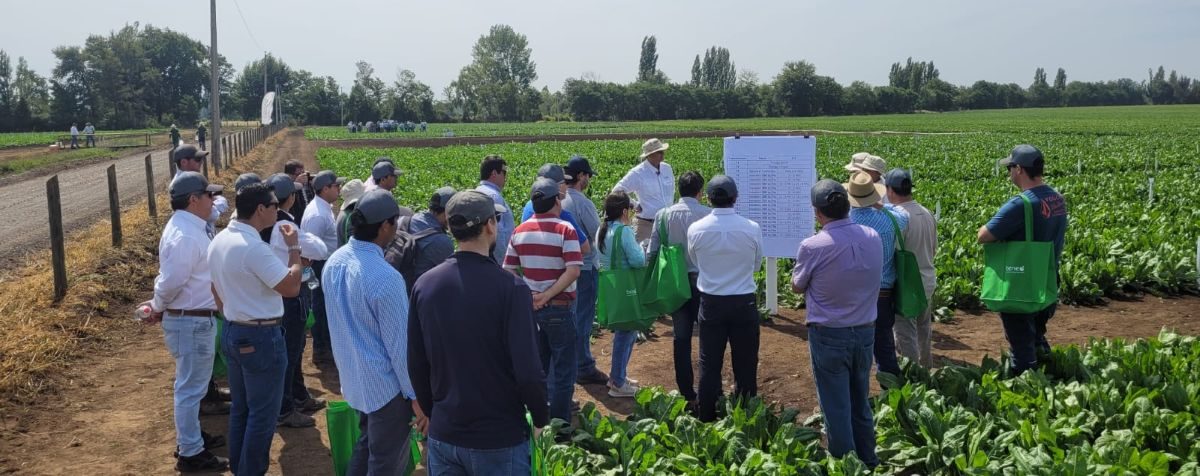
The same sense of continuity can be found within the BENEO team in Pemuco. Many colleagues have spent a significant time of their careers at the site, sharing demanding harvest campaigns, unexpected setbacks and personal milestones.
The development of Pemuco cannot be explained by investments or production figures alone. It is also the result of people who have shared knowledge, supported one another and continued to improve together over many years.
The connection extends beyond the site itself. BENEO’s collaboration with farmers, schools and local communities has grown steadily over the past two decades and continues to strengthen the region.
Read more: Chile celebrated with award ceremony
Today, Pemuco represents:
- around 5,000 hectares of chicory cultivation
- partnerships with more than 130 local farmers
- one of BENEO’s global production sites for chicory root fibres
- continuous investment in agricultural expertise and operational excellence
- two decades of shared growth built on trust and collaboration
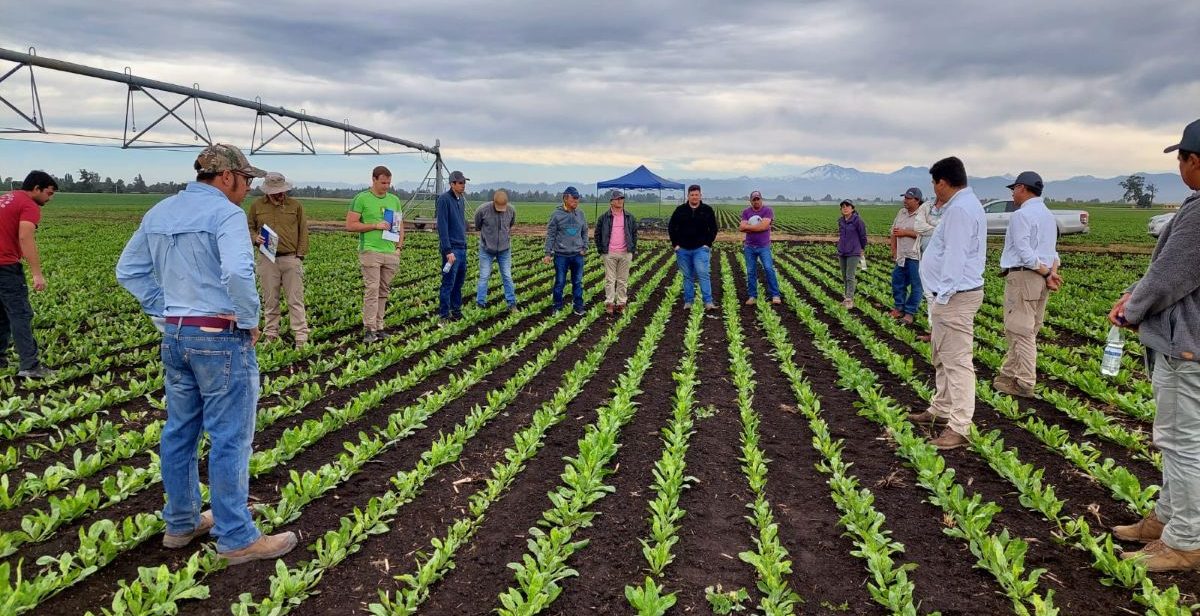
Innovation grows over time
Over the past twenty years, the Pemuco site has continued to evolve. Some changes are immediately visible, such as investments in processing capacity and new equipment. Others are less obvious, including the gradual improvements in cultivation practices, harvesting methods and agronomic expertise that have developed over many growing seasons.
This steady process of learning has shaped the site from the very beginning. Working closely with farmers, BENEO has continuously refined cultivation techniques to improve crop quality and yields. New seeders increased planting efficiency, harvesting technology was upgraded and digital tools such as SmartChicory now help farmers monitor crop development using satellite imagery and field data.
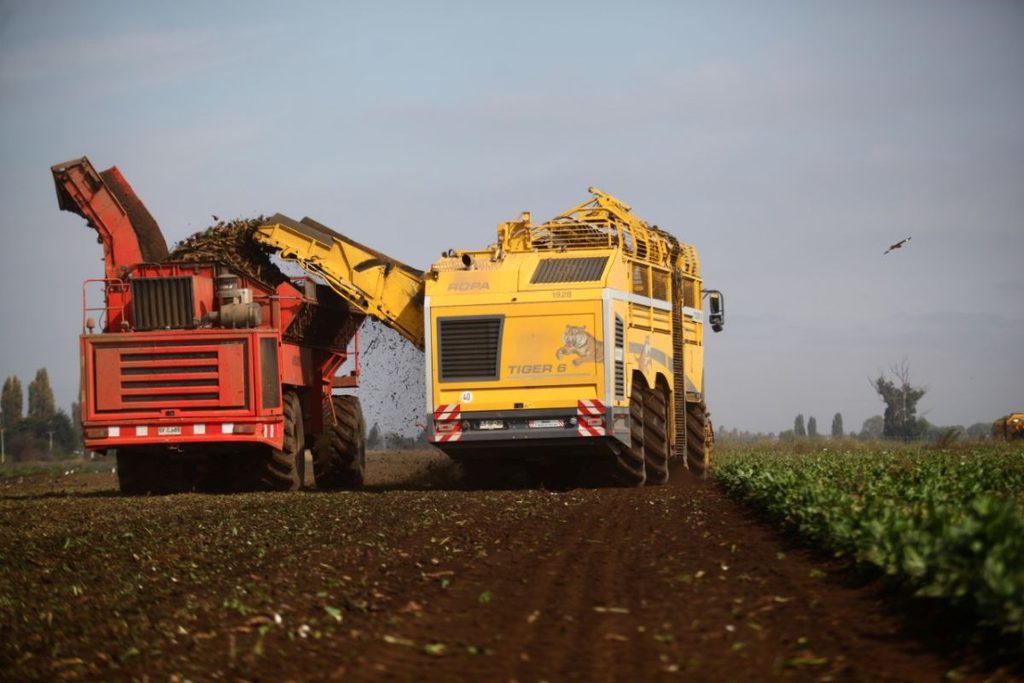
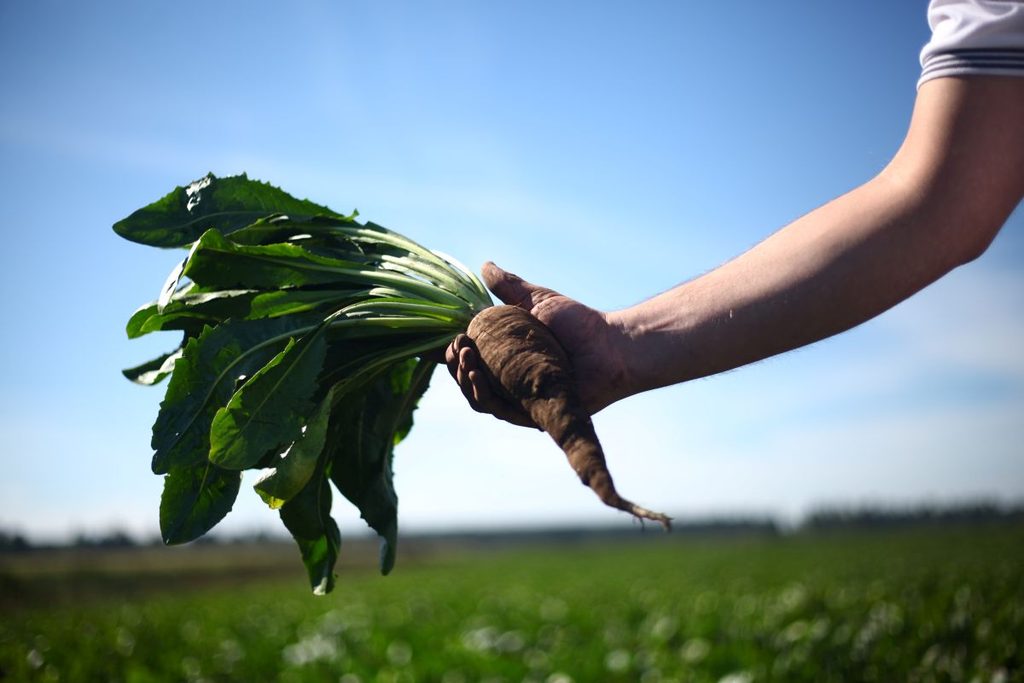
The results can be seen in the harvest. Recent campaigns have delivered some of the highest yields achieved across BENEO’s chicory cultivation network. In 2026, farmer Guillermo Quijada set a new benchmark by harvesting 110.6 tonnes per hectare, the highest yield ever recorded within BENEO’s operations in both Chile and Europe.
From field innovation to operational excellence
Continuous improvement extends beyond the field and into the production site itself. As demand for chicory root fibres has grown internationally, BENEO has continued investing in the Chilean operation. Capacity has increased, production processes have become more efficient and new technologies have been introduced to support long-term growth. The expansion completed in recent years reflects both increasing market demand and BENEO’s confidence in the future of the Pemuco site.
Growth in Pemuco has also gone hand in hand with a strong focus on operational excellence and quality. Continuous improvement, process standardisation and the development of our people help us make the most of every stage of production and run the site increasingly efficiently.
Quality and food safety are equally central to the way the plant operates. The site works in line with rigorous international quality standards and certifications, including the requirements associated with ingredients for baby food applications. This provides customers with confidence in the safety and consistent quality of ingredients produced in Pemuco, including those supplied to markets across the Americas and Asia.
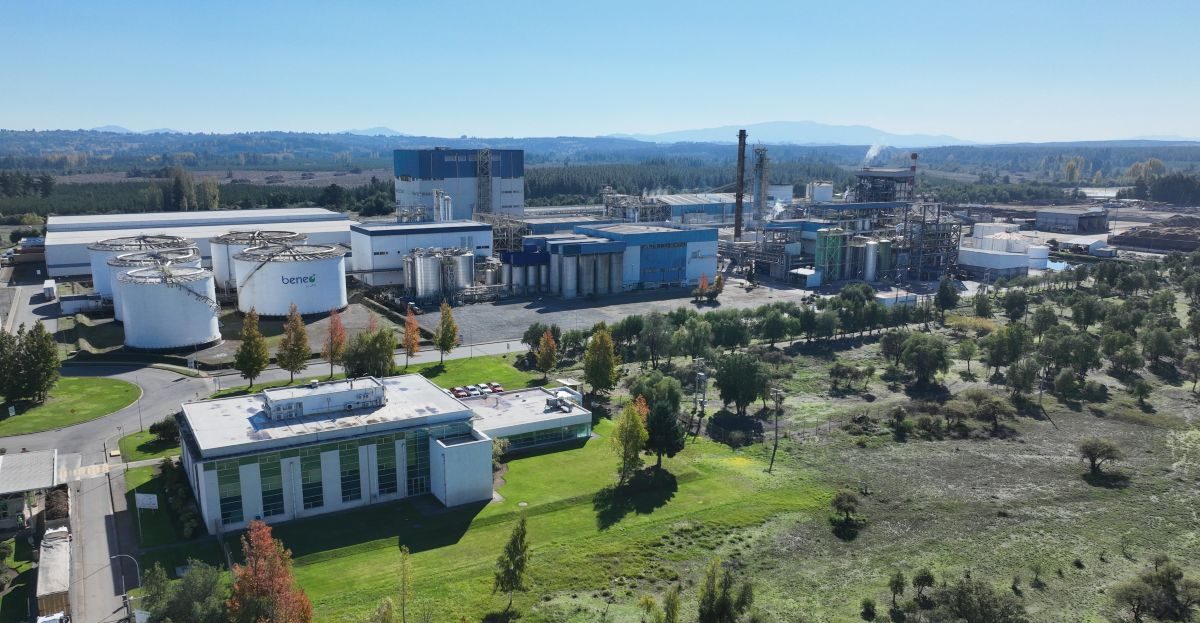
Every harvest also provides new opportunities to learn. We previously shared a behind-the-scenes look at the teamwork, planning and coordination that make each chicory campaign possible.
Read more: Chicory campaign 2022 at BENEO in Chile
Growing responsibly
The story of Pemuco is also one of continuous improvement in sustainability. As the site has expanded, investments have focused on using resources more efficiently while preparing the operation for future challenges.
One important milestone was the installation of a biomass boiler, allowing renewable energy generated from locally sourced residual wood to replace a significant proportion of fossil fuels used in production. Additionally, investments into existing processing equipment and in new technology, such as new evaporation systems, allowed not only to reduce the energy required, but also ensured energy is used in the most efficient way possible.
Sustainability also starts in the field. BENEO works closely with farmers on resilient farming practices. This includes improving cultivation practices, making better use of resources and deepen understanding of agricultural carbon footprints. Digital tools, regular technical support and knowledge sharing all contribute to helping growers make informed decisions throughout the season.
These initiatives reflect a practical approach to sustainability. At the same time they contribute to the year-on-year improvements of the site.
Sustainability in practice
Over the past two decades, Pemuco has introduced initiatives including:
- renewable energy through a biomass boiler
- lower specific energy consumption
- digital agronomy tools for farmers
- continuous process optimisation
- sustainable mobility initiatives
- local reforestation activities
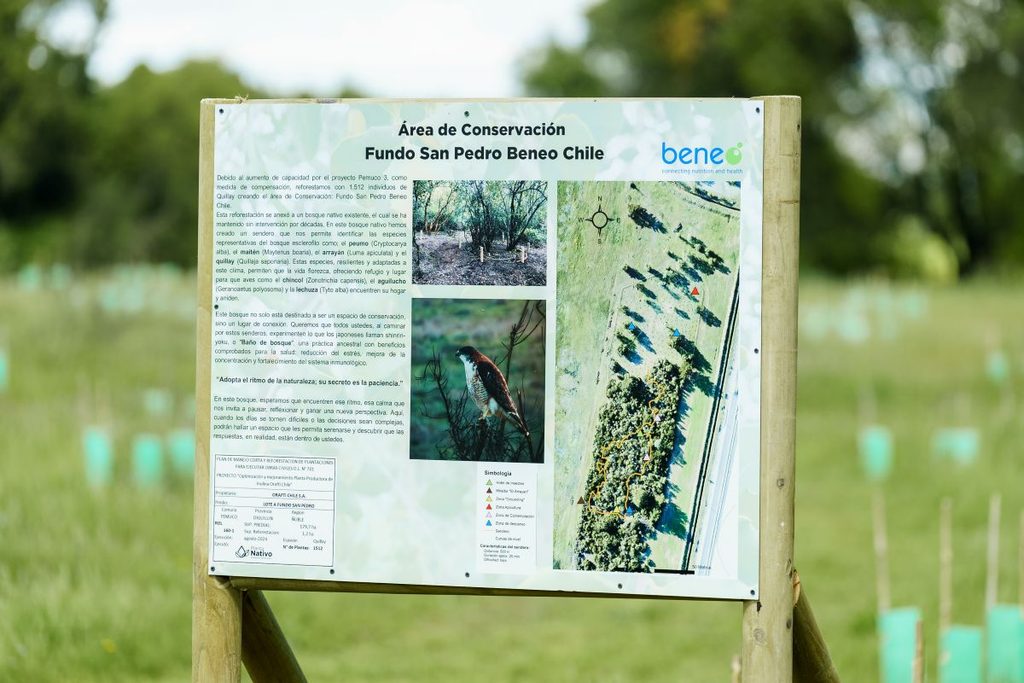
The site’s initiatives to improve sustainability also extend beyond the production site itself. Projects promoting sustainable mobility and reforestation demonstrate how environmental responsibility is reflected in different aspects of daily operations.
Read more:
Sustainable mobility
BENEO’s reforestation project in Chile
Looking ahead
Twenty years ago, BENEO introduced industrial chicory to a region where the crop was virtually unknown. Since then, Pemuco has become much more than a production site.
Today, it is part of a global supply network serving BENEO’s customers around the world. It is also part of the local community, providing opportunities for farmers, employees and their families while contributing to the region’s agricultural development.
Looking back, one lesson stands out. The success of Pemuco was never the result of a single investment or one important decision. It was built gradually by people through experience, close collaboration and the willingness to improve from one season to the next.
That process continues today. Consumer expectations are changing. Agriculture is adapting to new environmental and economic challenges. New technologies continue to support resilient farming practices and more efficient production.
The same mindset that shaped the site over the past twenty years will continue to guide its future. Guillermo Fernández, Plant Director of BENEO Chile, believes the 20th anniversary is as much about the people behind the achievement as the milestone itself.
Reaching our 20th anniversary in Chile confirms that a long-term commitment can generate value for people, agriculture and the country. We look back with pride on what we have built together with our colleagues, farmers and communities, and with the conviction that there is still enormous potential to continue growing from Ñuble out into the world.
Guillermo Fernández, Plant Director, BENEO Chile
Twenty years ago, introducing industrial chicory to southern Chile required curiosity, patience and a willingness to try something new.
Today, the crop is firmly established, the knowledge built over two decades continues to grow and the relationships formed along the way remain at the heart of the site’s success.
Some things really do take time to grow.
What twenty years in Pemuco have shown
✔ Long-term thinking delivers lasting results.
Building a new cultivation and processing site required patience, investment and a willingness to learn over many seasons.
✔ Partnerships create resilience.
Close collaboration with farmers, employees and local communities has been essential to the site’s development.2
✔ Continuous improvement connects field and plant.
Progress has come through advances in cultivation and agronomic expertise as well as process standardisation, new technologies and people development within the Pemuco operation.
✔ Quality and food safety are fundamental.
International quality standards and stringent requirements for sensitive applications such as baby food help ensure consistent quality and build confidence among customers worldwide.
✔ Sustainability is part of everyday operations.
Investments in energy efficiency, digital farming tools and environmental initiatives have become part of the site’s long-term development.
✔ The story continues.
Pemuco’s success provides a strong foundation for meeting future challenges while continuing to support customers, agriculture and the local community.