
Summary
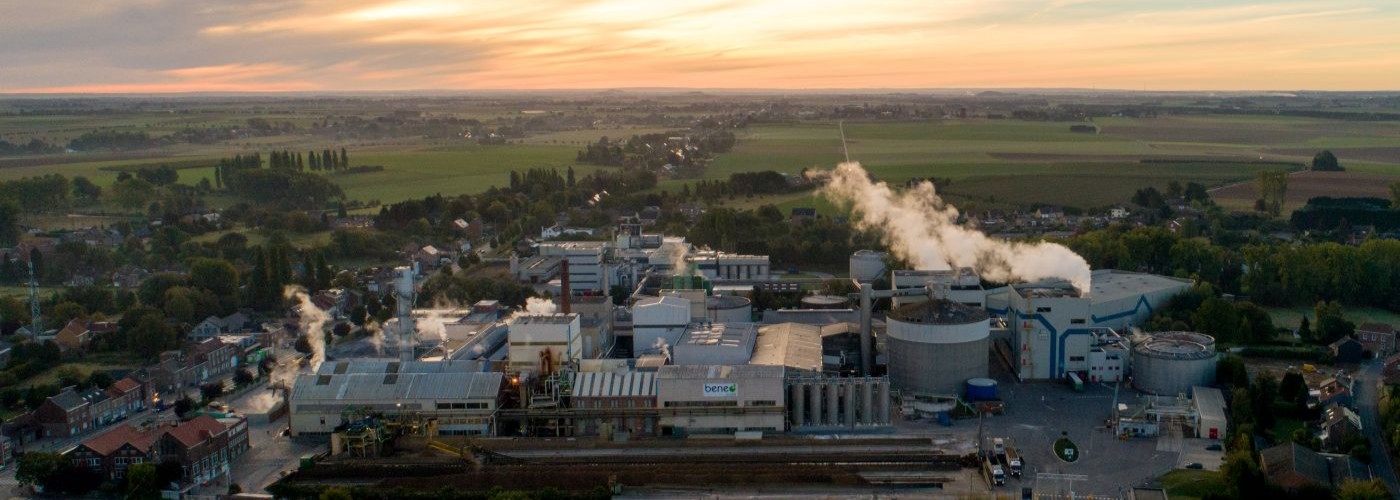
What does it take to give a historic production site a new future? BENEO’s Oreye plant in Belgium began as a sugar factory in 1889. A century later, changing market conditions and scientific innovation led to its transformation into a production site for the prebiotic chicory root fibres inulin and oligofructose. Today, Oreye combines more than 130 years of industrial expertise with local chicory cultivation and modern fibre production. This article traces that transformation and follows the journey of chicory root from the field to a versatile functional ingredient used worldwide.
From sugar to prebiotic fibres
Today, the Oreye plant is an important part of BENEO’s global production network. Its transformation is a story of industrial heritage, scientific curiosity and the determination to make the most of existing expertise and equipment.
In this article, we explore:
- BENEO’s Oreye site and its evolution from sugar factory to fibre production
- Why chicory root offered the site a new future
- Key milestones in the transition to inulin and oligofructose
- How partner farmers grow and harvest chicory in Belgium
- How chicory root becomes refined inulin at Oreye
- The nutritional and technological role of chicory root fibres
- How local agriculture connects with global ingredient supply
Did you know? BENEO’s plant in Oreye, Belgium, began life as a sugar factory in the nineteenth century. A century later, innovation gave the site a new future: producing the prebiotic fibres inulin and oligofructose from chicory roots.
Where it all began
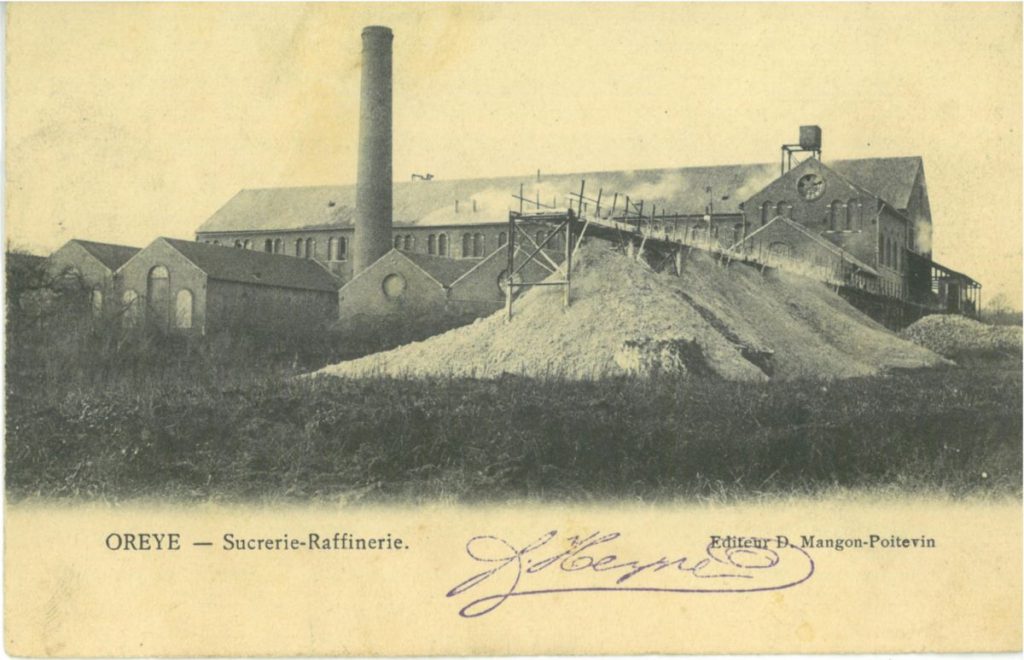
The Oreye sugar factory, originally known as Sucrerie d’Oreye, opened in 1889, with its first sugar campaign beginning in 1890. Following a takeover, the site took the name Sucrerie Notre-Dame in 1901. In response to the economic crisis of the early 1930s, the company diversified by adding a refinery in 1931. Five years later, the Oreye factory became a subsidiary of Raffinerie Tirlemontoise, Belgium’s best-known sugar producers.
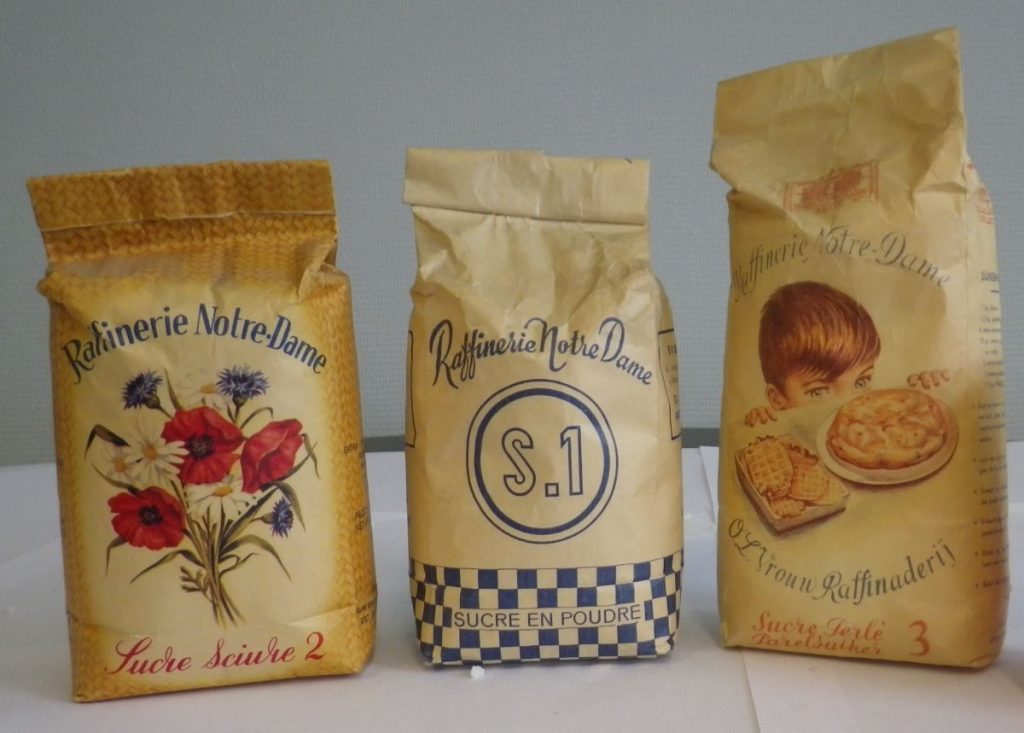
The refinery became well known for its household sugar, Sucre d’Oreye. In the early 1980s, however, it stopped refining and packaging household sugar and concentrated on high-purity sugars for artisanal and industrial customers. These included pearl sugar for products such as Liège waffles and brioches, granulated sugar for soft drinks and dairy products, and fine sugar for instant drinks, confectionery coatings and pharmaceutical applications.
| Key milestones 1889 The Oreye sugar factory is founded. 1890 The first sugar campaign begins. 1901 The site is renamed Sucrerie Notre-Dame. 1931 A refinery is added to diversify production. 1936 The factory becomes a subsidiary of Raffinerie Tirlemontoise. |
When innovation became a necessity
From 1989 onwards, developments moved quickly. That year, the German Südzucker AG (today’s mother company of BENEO) acquired Raffinerie Tirlemontoise. Across the sugar industry, smaller factories were closing, and the Oreye plant was too small to remain competitive as a conventional sugar factory. Fortunately, the research and development team at Raffinerie Tirlemontoise was already exploring how to use the existing industrial assets to process other crops and create innovative ingredients. Chicory root emerged as a particularly promising option.
Why chicory root?
The future of the Oreye plant did not depend on producing more sugar, but on applying its expertise in an entirely new way.
Following extensive research into the nutritional properties of chicory root fibre and its technological applications but also economic factors including the market potential and operational requirements such as process technology, etc, Raffinerie Tirlemontoise decided in 1989 to convert Oreye into a facility for producing inulin and oligofructose.
One decisive advantage was the similarity between sugar extraction and inulin extraction. The team could retain much of the existing equipment and know-how, while targeted investments enabled the refining of chicory juice and the spray-drying of the finished ingredient.
| The conversion in four steps 1989 — Decision The decision is taken to convert the Oreye site to the production of prebiotic fibres from chicory roots. 1992 — Mixed campaign The plant processes sugar beet during the first part of the campaign and chicory roots during the second part. 1995 — Final sugar beet campaign Oreye processes sugar beet for the last time and completes its industrial transition. 1996 — A new identity Following its first campaign dedicated exclusively to chicory roots, the company becomes Raffinerie Notre-Dame Orafti (an acronym derived from Oreye, Raffinerie and Tirlemontoise). |
The conversion proved successful. Over the following years, the company became a world leader in prebiotic chicory root fibres. The founding fathers of the prebiotic concept, Glenn Gibson and Marcel Roberfroid, even used BENEO’s chicory inulin in their pioneering work. Knowing that chicory root fibres played a key role in shaping the definition of prebiotics makes BENEO very proud[1].
A natural ingredient for healthier nutrition
Interest in digestive health and the role of nutrition for a healthier life have grown considerably. Scientific evidence has established inulin and oligofructose as proven prebiotics that support beneficial microorganisms in the gut and help increase the fibre content of foods.
They also offer useful technological properties. Depending on the application, chicory root fibres can help manufacturers among others to reduce sugar or fat while maintaining an appealing taste and texture. This combination of nutritional and functional benefits makes them suitable for a broad range of foods and drinks.
As global demand grew, BENEO strengthened supply by establishing a second production plant in Pemuco, Chile, which has been operational since 2006. In 2007, BENEO brought the plants in Oreye and Pemuco together within the newly created BENEO Group, alongside Remy in Wijgmaal, Belgium, and Palatinit in Offstein, Germany.
Today, manufacturers use BENEO’s chicory root fibres in a wide variety of food and feed applications. They also have a long-established role in products for infants – the most sensitive consumer group.
From field to fork: How chicory becomes prebiotic fibre
The chicory roots processed in Oreye are grown by partner farmers in Belgium. This close connection to local agriculture enables BENEO to turn a locally grown crop into a functional ingredient for customers worldwide. Since 2020, the portfolio has also included organically certified chicory root fibres.
Growing and harvesting chicory
Chicory is a biennial plant. During its first year, it stores energy as carbohydrates—primarily inulin—in a large root. In nature, these reserves would support flowering and seed production in the second year. For fibre production, the roots are harvested in the autumn of the first year, when their inulin reserves are at their peak.
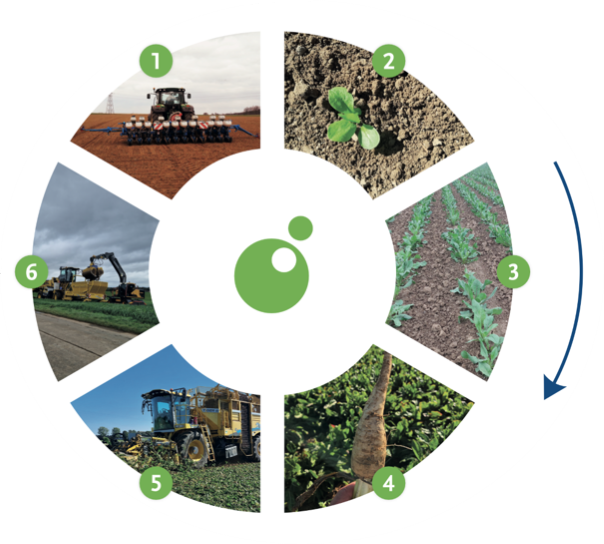
1. Sowing: Because chicory seeds are small, soil preparation, moisture and weather conditions are critical for successful germination.
2. Early growth — May: Chicory is originally a Mediterranean plant and begins growing strongly once temperatures rise.
3. Leaf and root development — June: The developing leaves allow the root to thicken.
4. Deep rooting — August and September: The roots can penetrate up to two metres into the soil, helping the crop tolerate periods of heat and drought.
5. Harvest — September to December: The roots are harvested throughout the campaign to ensure a regular supply to the factory.
6. Loading and transport: Once dug up, the roots are stored temporarily at the field edge before being loaded onto lorries. As much soil as possible is removed and left in the field.
Extraction: releasing the inulin
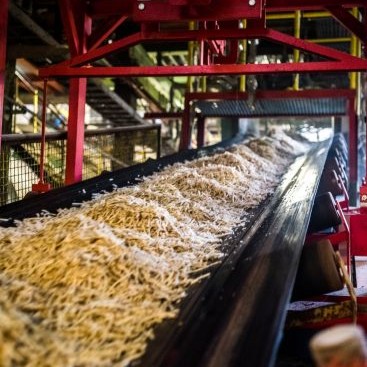
At the factory, the chicory roots are cleaned and cut into small strips known as cossettes. These are transferred to a diffusion tank and brought into contact with hot water. The inulin passes from the root strips into the water—like the way flavour is extracted when tea is brewed.
The resulting raw juice then passes through several purification stages to remove unwanted components.
Refining: creating a clean, versatile ingredient
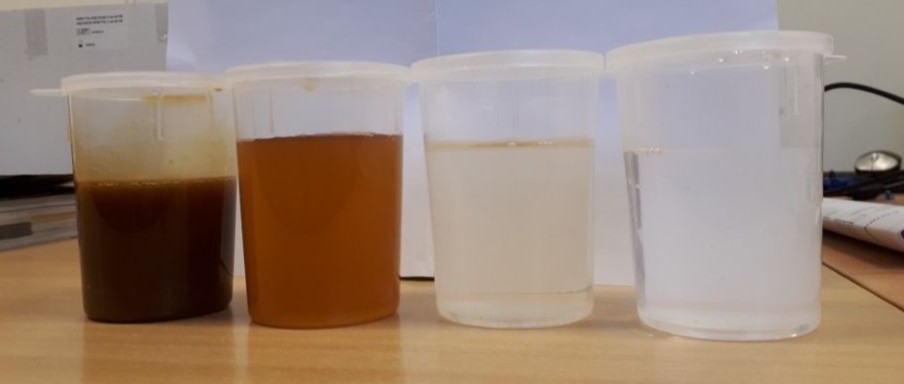
The refining unit completes the purification of the raw juice. In addition to removing impurities, the process aims to create a clear liquid and addresses the natural bitterness of chicory.
Available as liquid or powder
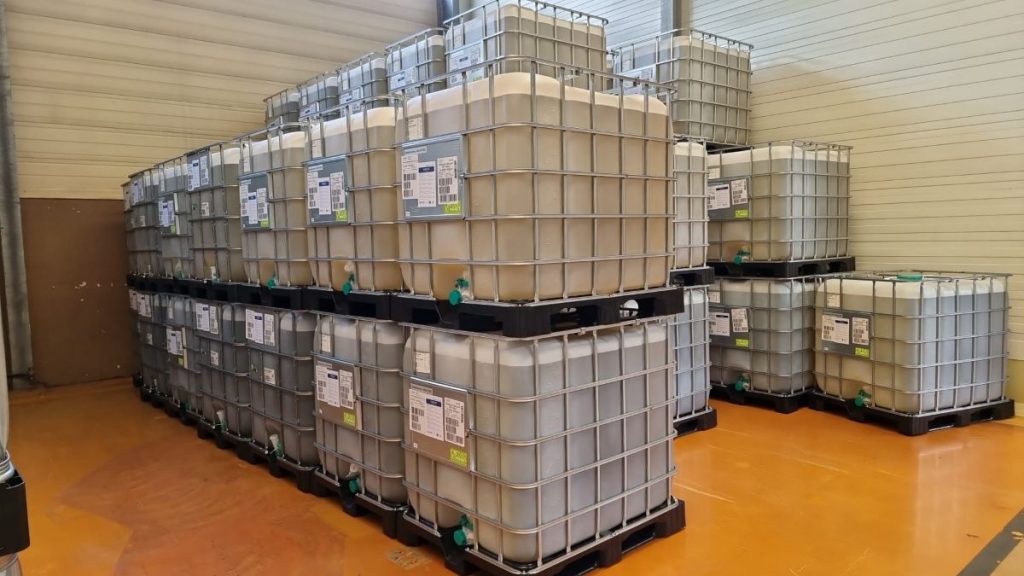
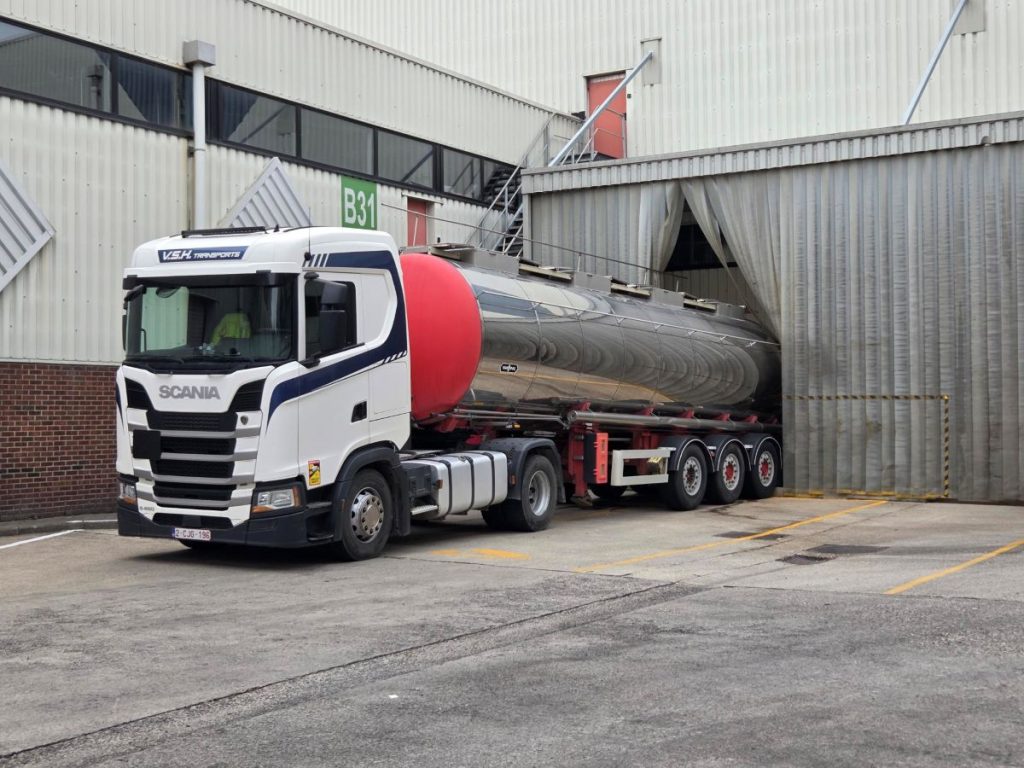
Part of the refined ingredient is supplied to customers in liquid form. The remainder is spray-dried into powder. Offering both formats enables BENEO to meet the processing and formulation needs of a wide variety of customers and applications.
A local plant with a global impact
More than 130 years after it opened as a sugar factory, the Oreye plant continues to transform agricultural raw materials into ingredients used in everyday foods. BENEO’s inulin and oligofructose can be found in products ranging from yoghurt, breakfast cereals and biscuits to dairy products and specialised nutrition.
The site’s history demonstrates how industrial expertise, scientific research and a willingness to innovate can give an established factory an entirely new future. From Belgian chicory fields to food products enjoyed around the world, the Oreye plant remains a powerful example of innovation from field to fork.
Key takeaways
✅ Oreye has more than 130 years of industrial history.
Founded as a sugar factory in 1889, the site successfully adapted its expertise and infrastructure to a changing market.
✅ Innovation gave the plant a new future.
From 1989 onwards, the site was progressively converted from sugar processing to the production of inulin and oligofructose from chicory roots.
✅ Existing expertise helped enable the transition.
Similarities between sugar and inulin extraction meant that equipment and process know-how could be retained and complemented by targeted investments.
✅ Chicory root fibres combine nutritional and technological benefits.
Inulin and oligofructose are proven prebiotics and can also support applications such as fibre enrichment and, depending on the formulation, sugar or fat reduction.
✅ The process starts with locally grown chicory.
Partner farmers in Belgium grow the chicory roots processed in Oreye, connecting local agriculture with food and feed applications worldwide.
✅ Oreye demonstrates how industrial heritage and innovation can work together.
More than a century after opening, the site continues to transform agricultural raw materials into functional ingredients for modern nutrition.
[1] Want to know more? Read our article Unveiling Proven Prebiotics: The Science You Need to Know! and/or visit Dietary Fiber – the natural choice